
Minimal and Organic Modern are often used interchangeably, but they are not the same style. While both favor clean lines and uncluttered spaces, the feeling they create is very different.
If you’ve ever loved minimalist design in theory but found it cold or uninviting in real life, this comparison will help you understand why and show you which style is right for your home.
What Is Minimal Design?
Minimal design focuses on simplicity above all else. The goal is to remove anything unnecessary and let form, space, and function take center stage.
Key characteristics of minimalist interiors:
- Very limited color palette (often white, black, or gray)
- Clean, sharp lines
- Little to no decorative objects
- Emphasis on empty space
- Furniture chosen primarily for function
Minimal spaces often feel:
- Calm
- Quiet
- Structured
- Sometimes sterile or impersonal
Minimalism works best for people who value visual order, symmetry, and restraint — and who feel relaxed by open, empty space.
What Is Organic Modern Design?
Organic Modern takes the clean foundation of modern design and softens it with nature-inspired elements. It prioritizes warmth, texture, and livability — without clutter.
Instead of removing everything decorative, Organic Modern is intentional about what stays.
Key characteristics of Organic Modern interiors:
- Warm neutral tones (cream, beige, taupe, soft gray)
- Natural materials like wood, stone, linen, and clay
- Soft, rounded shapes mixed with clean lines
- Textural layering
- Fewer items — but each one adds warmth or character
Organic Modern spaces feel:
- Calm
- Inviting
- Relaxed
- Lived-in, not staged
This style is ideal if you love modern design but want your home to feel comfortable and human, not showroom-perfect. For curated shop-able ideas, check out luxe looking finds under $50 to kick-off your move towards organic modern style: Here!
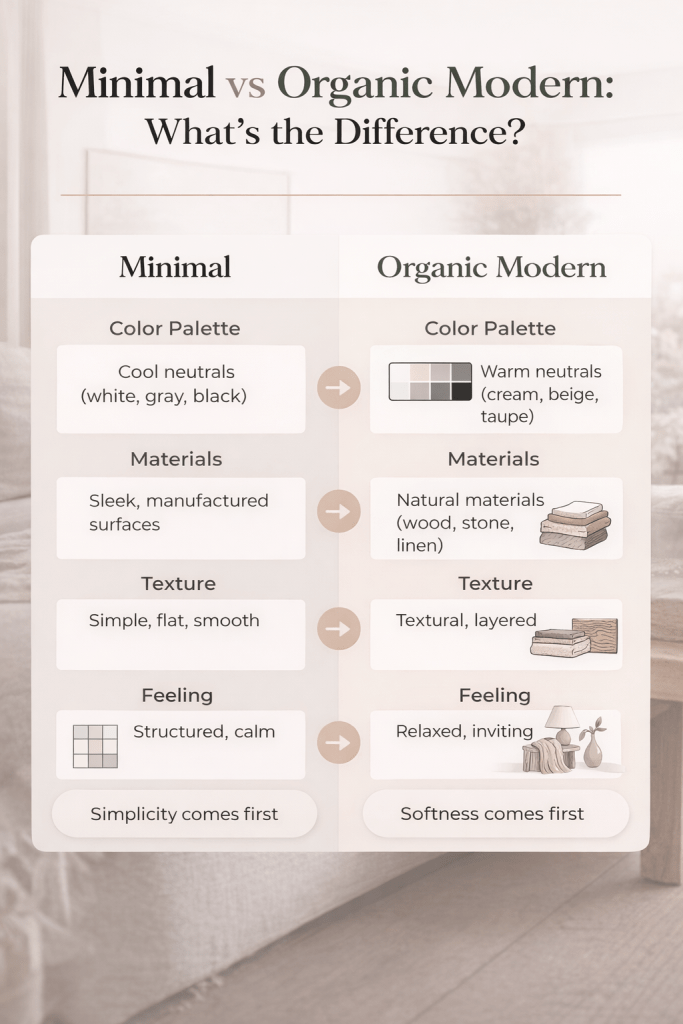
Minimal vs Organic Modern: The Key Differences
1. Color Palette
Minimal design often sticks to stark contrasts and cool neutrals.
Organic Modern leans into warm neutrals that feel soft and grounding.
2. Materials
Minimalism favors smooth, manufactured finishes.
Organic Modern emphasizes natural textures like wood grain, stone, and woven fabrics.
3. Texture
Minimal spaces rely on flat surfaces and clean planes.
Organic Modern uses texture to add depth — even when the color palette stays simple.
4. Overall Feeling
Minimal design aims for visual quiet.
Organic Modern aims for quiet comfort.
Which Style Is Right for You?
Choose Minimal design if:
- You prefer crisp, uncluttered spaces
- You enjoy visual restraint
- You feel energized by simplicity
Choose Organic Modern if:
- You want a calm space that still feels warm
- You love natural materials and texture
- You want modern design without rigidity
Many homes actually blend the two — using minimalist layouts with Organic Modern materials to create balance.
How to Transition from Minimal to Organic Modern
If your home already leans minimalist, you don’t need to start over. Small changes can shift the feeling dramatically:
- Swap cool whites for warmer neutrals
- Add one textured element (a rug, throw, or wood accent)
- Introduce curved or organic shapes
- Layer lighting to soften the space
Organic Modern isn’t about adding more, it’s about choosing better. Link here to curated shop-able lists if you are ready to invest! One room refresh for under $1000! (Including furniture!)
Final Thoughts
Minimal and Organic Modern share the same foundation, but they serve different emotional needs. One prioritizes restraint; the other prioritizes warmth.
If minimalism feels too cold, Organic Modern offers a way to keep clean design while making your home feel more inviting — and more livable.
This post may contain affiliate links. If you make a purchase through these links, I may earn a small commission at no additional cost to you. Thank you for supporting DesignDay.blog.
 designday.blog
Leave a comment